Coupling plumbing Broken Arrow, OK homeowners deal with usually starts the same way: a leak shows up under a sink, in a crawlspace, or behind a water heater, and the fix comes down to one small fitting. This guide breaks down the coupling types, materials, and warning signs worth knowing before a repair crew shows up. By the end, you'll know enough to ask the right questions and avoid paying for the wrong fix.
What Is a Pipe Coupling?
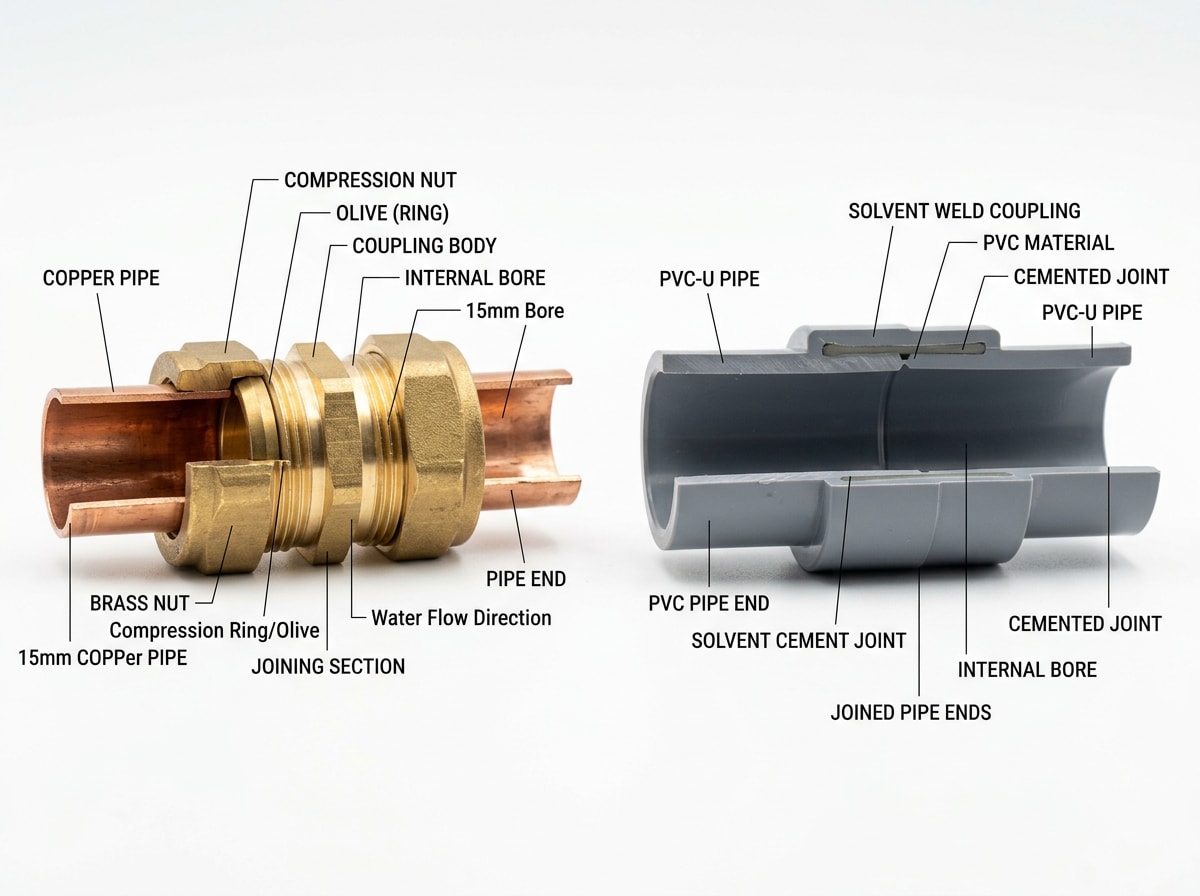
A pipe coupling is a short fitting that joins two pipes or tubes together, either in a straight run or as part of a larger configuration. Think of it as bridging material: it closes the gap between two pipe ends so water, gas, or waste keeps flowing without leaking at the seam.
Unlike some other fittings, a coupling creates a permanent connection between two pipes. That distinction matters later, since it's the main thing separating a coupling from a union.
For Broken Arrow homeowners, questions about pipe couplings usually come up during a leak repair, a line extension, or prep work before a repipe. On service calls across the Broken Arrow, OK area, a single failed coupling joint is one of the most common culprits behind a slow drip that homeowners assume is a bigger problem. Pricing depends heavily on pipe access, material, and how many joints are involved, so the most accurate way to budget a repair is a free estimate rather than a rule-of-thumb number.
Types of Pipe Couplings
Several coupling families cover most residential repairs, and knowing the basic categories makes it easier to follow along when a plumber explains your options.
The main types include full, half, reducing, compression, slip, grooved, and flange couplings, each suited to a different repair scenario, from simple line extensions to tight-space leak fixes. For a broader look at how these fit into whole-home plumbing work, see our general plumbing services page.
Full Coupling vs. Half Coupling: What's the Difference?
Both are short lengths of pipe used to connect pipework, but their shape determines the job they do. A full coupling connects two pipes of the same diameter end-to-end, making it the go-to choice for extending or repairing a straight run.
A half coupling has a flat back and is typically welded or threaded onto the side of a larger pipe or vessel, creating a branch connection rather than a straight joint. Homeowners encounter half couplings less often, mostly in water heater or boiler setups.
Which Coupling Should You Use?
The right coupling depends on pipe size, access, and whether the joint needs to be reusable. Here's a quick comparison:
| Coupling Type | Best For | Advantage | Drawback |
|---|---|---|---|
| Full | Straight-line joins, same diameter | Strong, simple | Requires pipe movement to install |
| Half | Branch connections | Good for tapping into larger lines | Not for straight runs |
| Reducing | Joining different pipe sizes | Flexible sizing | Slightly weaker than full coupling |
| Compression | No-solder, tight spaces | No heat or glue needed | Can loosen over time |
| Slip | Emergency or repair work | Fast, no pipe cutting needed | Not ideal as permanent fix |
| Flanged | High-pressure or large pipe | Easy to disassemble | Bulkier, costlier |
Materials of Pipe Couplings
Coupling materials are chosen based on what's running through the pipe. Copper couplings handle hot water supply lines and HVAC systems well, while PVC coupling and CPVC options cover drainage and potable water in many homes.
PEX coupling fittings are common in newer residential and radiant heating systems because PEX is flexible and resists freezing damage better than rigid pipe. Galvanized steel, stainless steel, and black carbon steel couplings still show up in older Broken Arrow homes and some commercial applications.
Any fitting used in a drinking water line also has to meet federal lead-content limits. Under the EPA's lead-free plumbing regulations, pipes, pipe fittings, and fixtures used for potable water must meet a strict weighted-average lead limit, which is part of why a licensed plumber will double-check material compatibility before sealing a joint.
Typical Connection Methods
A threaded coupling uses internal or external threads to join pipes without welding, a practical choice for smaller-diameter pipes and systems that don't need frequent disassembly. Threading follows standardized specs, including the NPT standard covered in ASME's B1.20.1 pipe thread standard.
A welded coupling, by contrast, is fused directly to the pipe ends for a continuous, high-strength joint. Welded connections are typically reserved for high-pressure systems rather than standard home plumbing.
How Pipe Couplings Work in Plumbing Applications
Beyond the technical definitions, couplings do three practical jobs in a home's plumbing: extending pipe runs, repairing damaged sections, and enabling fast fixes during emergencies.
Connecting Pipes
A full coupling might extend a copper water supply line by joining two straight sections, while a reducer coupling connects a larger main line to a smaller branch feeding a single fixture. This is the most common way homeowners encounter couplings during routine plumbing work or line extensions.
Repairing Leaks and Broken Pipes
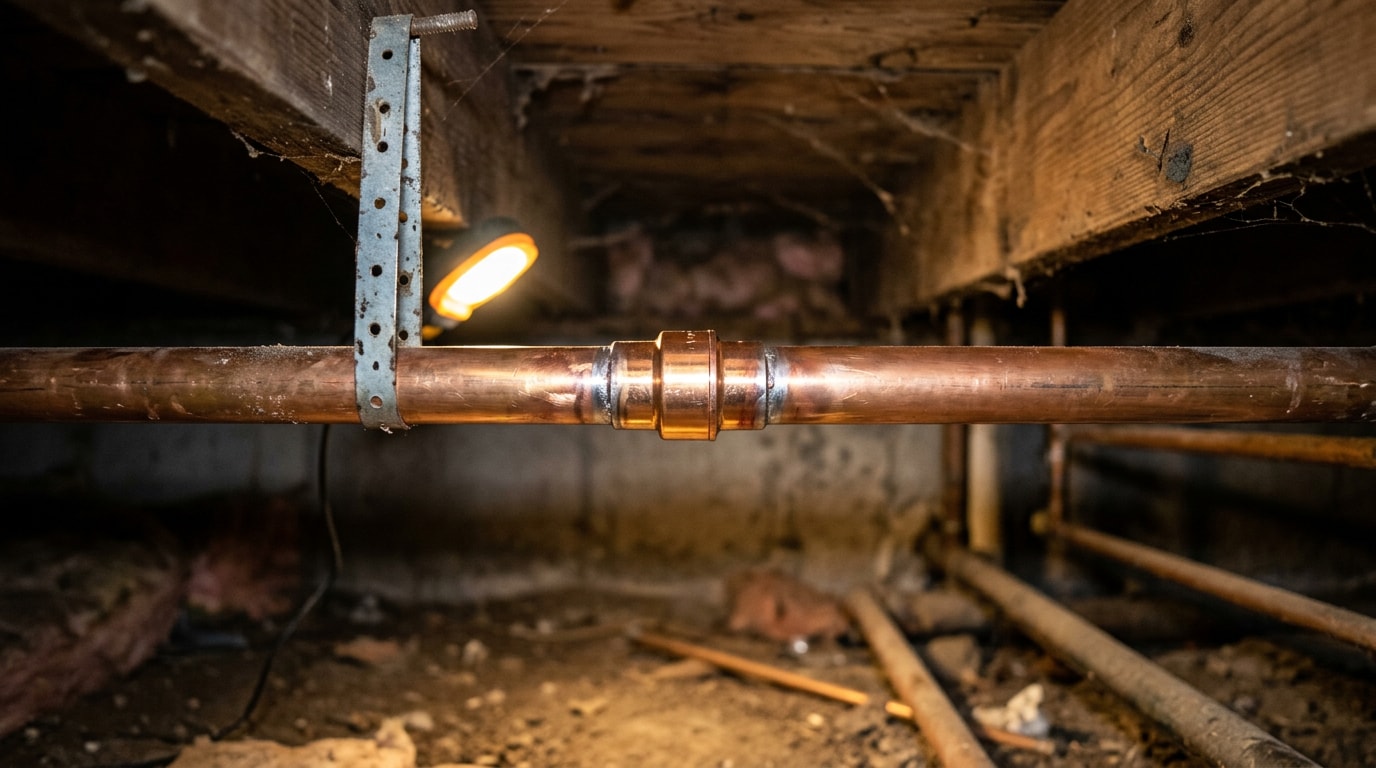
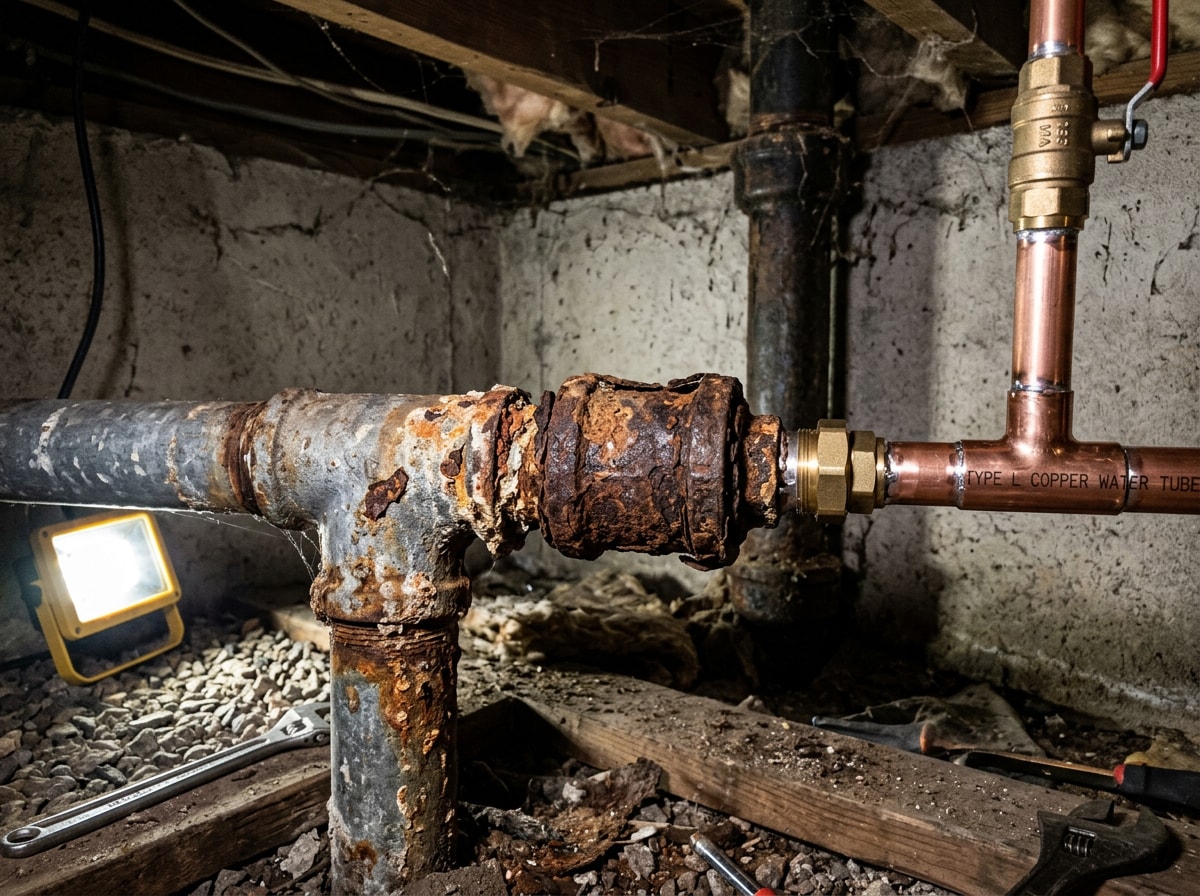
Couplings let a plumber repair just the damaged section instead of replacing an entire pipe run. A slip coupling repair is especially useful where cracks, pinholes, or corrosion have formed, particularly in tight crawlspaces or older systems where full pipe replacement would be disruptive.
Quick Installation in Emergency Situations
Push-to-connect PEX couplings, slip couplings, and flexible stainless steel couplings let plumbers make secure connections fast, without specialized tools. In a burst-pipe emergency, this speed matters as much as the long-term fix. If you're dealing with an active leak right now, our emergency plumbing team can walk you through immediate steps while help is on the way.
Coupling vs. Union: Overview Comparison Table
People often confuse couplings with unions, but the difference comes down to reusability. A coupling permanently connects two pipes, usually by soldering, gluing, or threading them in place for good.
| Factor | Coupling | Union |
|---|---|---|
| Connection | Permanent | Removable |
| Maintenance access | Limited once installed | Easy to disconnect |
| Reusability | Single use | Reusable |
| Removal method | Cutting required | Unscrews without cutting pipe |
| Pressure handling | Generally higher | Slightly lower due to seal points |
Warning Signs You Need a Coupling Repair
Rusty or discolored water, low water pressure, repeated leaks at the same spot, visible corrosion, and pinhole leaks in copper hot-water lines are common red flags. In many Broken Arrow homes built before the 1980s, these signs trace back to a failed or corroded coupling joint rather than the pipe itself, since galvanized fittings corrode from the inside out over decades of use.
If you're also noticing slow drains or gurgling fixtures alongside a suspected coupling leak, it's worth reading our guide on plumbing riser warning signs in Bixby, OK, since riser and joint failures often share similar symptoms. Catching corrosion early matters for water quality too: the EPA's work on lead service line replacement funding notes that aging metal lines can introduce contaminants into drinking water over time, which is one more reason not to ignore a joint that's visibly deteriorating.
Our Pipe Repair Process
When you call a plumber for a coupling or joint repair, expect an evaluation first, not an immediate fix. This protects you from paying for the wrong repair.
System Evaluation
A plumber inspects the existing pipe material, condition, and extent of damage before recommending a fix. This usually includes a visual inspection, sometimes pressure testing through our water pressure testing service, and occasionally a basic water quality check if discoloration or odd taste has been reported.
If the evaluation turns up multiple failed joints or widespread corrosion, a section-by-section coupling repair may no longer make sense. In that case, our professional re-piping services page covers what a partial or whole-home repipe involves.
Comparing DIY and Professional Pipe Repair
A slip coupling repair on an exposed, accessible pipe might be reasonable for a confident DIYer. Compression and threaded couplings on pressurized or hidden lines are riskier territory where a wrong size or material choice leads to repeat leaks.
| Factor | DIY Approach | Professional Plumber |
|---|---|---|
| Material selection | Risk of wrong pipe type/size | Matched to existing system |
| Code compliance | Easy to miss local code | Code-compliant installation |
| Tool access | Limited | Full equipment on hand |
| Long-term reliability | Variable | Warrantied workmanship |

If you're unsure which category your repair falls into, request a free estimate before starting work yourself. You can also browse our full plumbing services lineup or visit our homepage to see everything we cover across the Tulsa metro.
FAQ
Quick answers to the questions Broken Arrow homeowners ask most often about pipe couplings and repair.
What is the difference between full and half coupling?
A full coupling connects two pipes of the same diameter in a straight line. A half coupling branches off a larger pipe or vessel instead of joining two equal-sized pipe ends.
What are the different types of pipe couplings and their uses?
Full couplings connect small-bore pipes, half couplings branch off larger pipes, compression couplings align pipes without soldering, slip couplings suit quick repairs, and reducer couplings join pipes of different diameters.
Can I connect a PVC coupling directly to a copper pipe?
Not without a transition fitting. PVC and copper expand and seal differently, so plumbers use a threaded or compression transition fitting rated for both materials rather than gluing PVC straight to copper.
How long does a coupling repair take?
A single accessible joint is often a same-visit repair. Jobs take longer when the coupling is behind a wall, under a slab, or part of a multi-joint failure that needs camera inspection first.
How much does a plumber cost in Broken Arrow?
Costs vary by job complexity, pipe access, and material. Free estimates and upfront pricing are standard practice, and a quote request is the most reliable way to get an exact number for your situation.
Are your plumbers licensed and insured?
Yes. Our plumbing technicians are fully licensed and insured, meeting Oklahoma Construction Industries Board requirements for residential plumbing work, which include verified field experience, a passing state exam score, a surety bond, and general liability insurance. Ask for license verification when scheduling your appointment.