Learning how to unclog a bathtub in Tulsa, OK almost always comes down to one stubborn culprit: a tangle of hair and soap scum sitting just below the drain stopper.
On most service calls across Tulsa's older neighborhoods, this single fix clears the clog before any tool more complicated than a flashlight gets involved.
Work through the steps below in order, gentlest first, and most tubs drain freely again before you ever touch a chemical cleaner.
Quick Diagnosis: Match Your Symptom to the Fix
Not every slow tub needs the full sequence below. Use this table to jump to the step that fits what you're seeing.
| What You're Seeing | Likely Cause | Start Here |
|---|---|---|
| Water drains slowly, hair visible at the opening | Hair wrapped on the stopper stem | Step 1: Remove the stopper |
| Tub drains fine but smells musty | Soap residue or a dry trap | Step 4: Baking soda and vinegar |
| Tub is full and won't move at all | Clog below the stopper, in the trap or overflow | Step 1, then Step 3 (plunger) |
| Clog keeps coming back every few weeks | Buildup deep in the drain line | Step 5, then consider professional drain cleaning |
| Other sinks or toilets are slow too | Main line or branch line blockage | Skip DIY — call a plumber |
Step 1: Remove the Stopper and Clear Hair by Hand
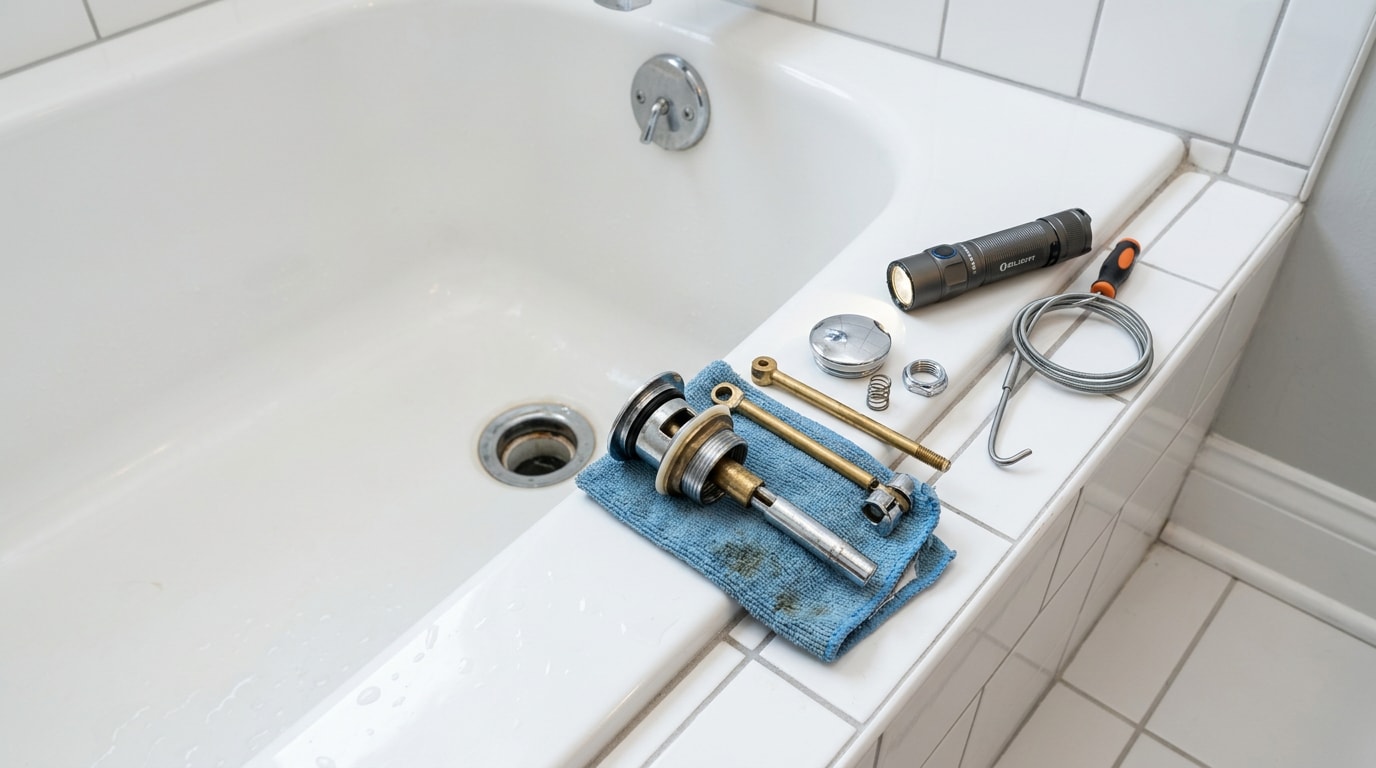
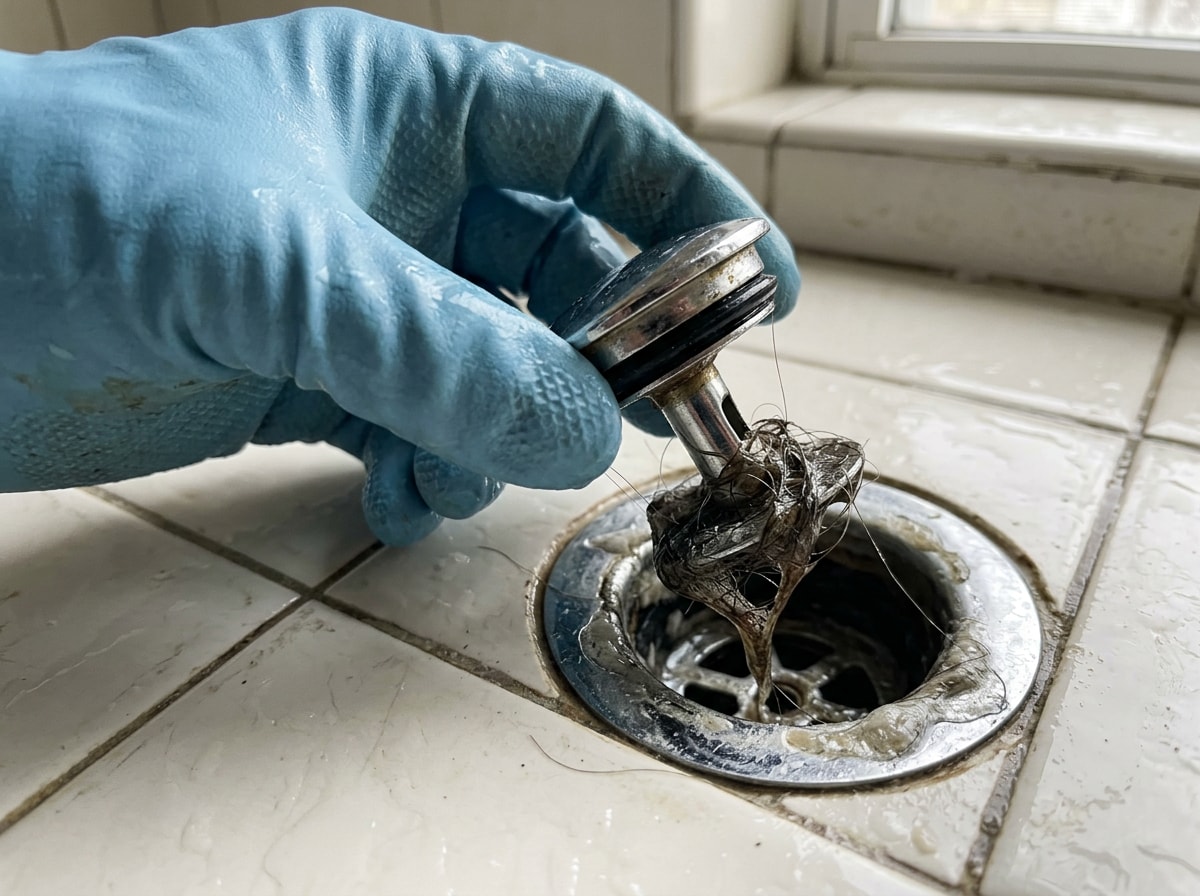
The fastest way to unclog a bathtub drain is to physically pull the hair clog out from just below the stopper. This single step resolves most slow-draining tubs without any tool beyond a drain hook or bent wire hanger.
Start by identifying your stopper type:
- Lift-and-turn stopper: unscrews counterclockwise after you pull it up.
- Push/pull stopper: pulls straight out once it's in the up position.
- Trip-lever stopper: no visible plug at all — the blockage point is usually a spring or plunger mechanism hidden inside the overflow tube.
Once it's removed, shine a flashlight down the drain. You'll likely see a dark, ropey mass of hair and soap residue sitting right at the opening.
A drain hook works best here. A straightened wire hanger does the job in a pinch — just bend a small hook at the end and twist as you pull up.
If this step alone doesn't restore full drainage, recurring buildup is a sign to look into professional drain cleaning services rather than repeating the same DIY fix every month.
Step 2: Flush the Drain With Hot Water (Not Boiling)
Once the visible hair is gone, run hot tap water for a minute or two. Heat helps dissolve the waxy soap film that hair clogs leave behind and can clear light buildup on its own.
Boiling water is more aggressive, but it carries real risk for Tulsa homes built with PVC drain lines. PVC pipe and fittings can withstand normal temperatures encountered in a sanitary waste system, but the recommended maximum temperature for continuous drainage applications is 140°F. Boiling water runs at 212°F, well past that threshold.
Check your pipe material before you reach for a kettle. When in doubt, stick with hot tap water instead of boiling.
Run the water, then test drainage by letting the tub fill an inch and watching how fast it empties.
Step 3: Plunge With the Overflow Sealed
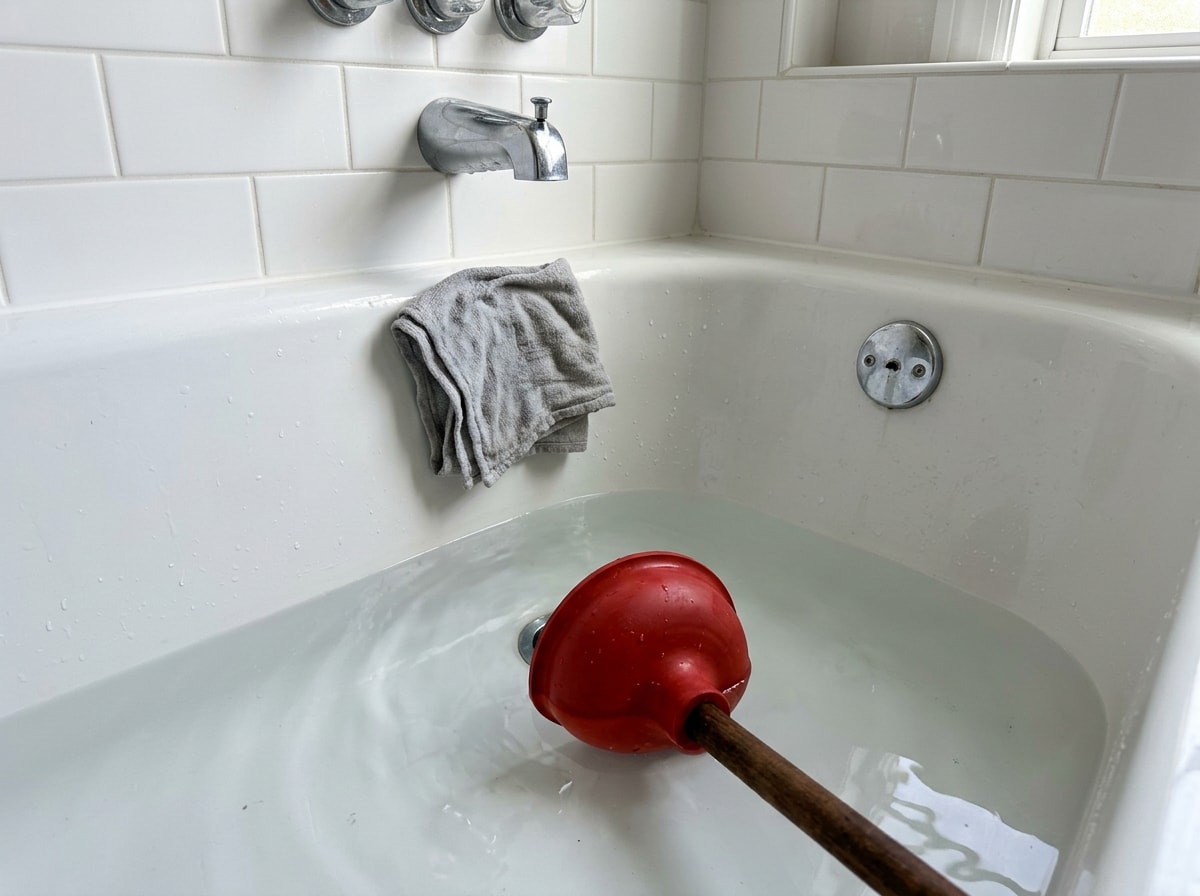
A bathtub plunger only works if the overflow plate is sealed first. An open overflow hole lets air escape and breaks the suction the plunger needs to push water through the clog. This is the single most-skipped step in DIY plunging attempts.
Here's why it matters: plunging builds air pressure above the clog and forces it downward. If the overflow opening (the metal plate a few inches above the drain) is open, air leaks out through it instead of pushing on the blockage.
Fix this by pressing a wet rag firmly into the overflow opening. It needs a tight seal, not just a loose cover.
Use a basic cup plunger, the same kind used for sinks, rather than a flange plunger designed for toilets. Fill the tub with a few inches of water so the cup stays submerged, then plunge in firm strokes for about 15-20 seconds at a time.
If plunging restores drainage, test it again a day later before assuming it's fully resolved. A slow drain that returns within days usually means the clog is deeper than this method reaches. If the tub backs up completely, that's a sign to call for emergency plumbing services.
Step 4: Try Baking Soda and Vinegar
Pour half a cup of baking soda down the drain, follow with half a cup of vinegar, and let the fizzing reaction sit for 15-30 minutes before flushing with hot water.
This combination works reasonably well on soap scum and mild odor-causing residue.
It is not strong enough to break up a dense, compacted hair clog. If you've already removed visible hair and plunged without success, this step is more of a maintenance habit than a cure for a serious blockage.
Step 5: Use a Plumbing Snake
When hand-removal, hot water, and plunging all fail, a plumbing snake (also called an auger) is the next step up.
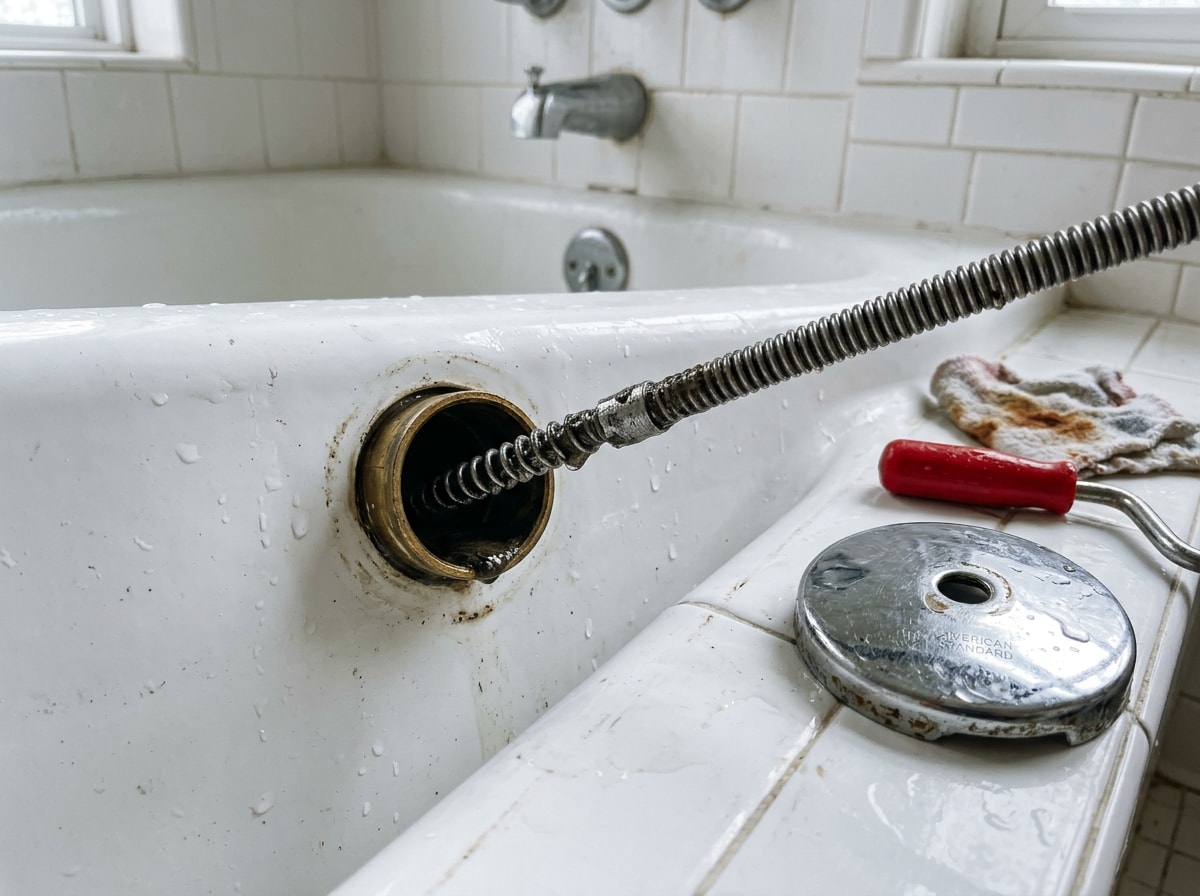
Feed the cable through the overflow opening rather than the drain itself. It's a straighter path to the clog and avoids kinking the cable against the drain's curved crossbar.
Remove the overflow plate, insert the snake, and crank slowly as you feed it in. You'll feel resistance when it hits the clog. Keep cranking gently to either hook the debris or break it apart enough to flush through.
Pull the snake back slowly once you feel it move past the obstruction. Expect some hair and gunk to come out with it. Run hot water afterward to flush remaining debris.
If the snake doesn't restore flow, or the clog is beyond where a handheld snake can reach, a drain camera inspection can pinpoint exactly where the line is blocked before anyone starts cutting into a wall.
Should You Use a Chemical Drain Cleaner?
Mechanical methods (plunging and snaking) are the safer first choice over chemical options. Most plumbers recommend exhausting those before reaching for a bottle.
Products that rely on caustic chemicals generate heat as they break down organic material. That heat is part of why repeated or heavy use raises real concerns about pipe damage, especially in older plumbing. Treat chemical cleaner as a last resort, not a routine maintenance step.
A few do's and don'ts worth following:
- Do wear gloves and ventilate the bathroom if you use any chemical product.
- Do try plain hot water first to see if the clog loosens before adding chemicals.
- Don't ever mix chemical drain products, even different brands.
Never mix two cleaners of different types together, especially if one contains ammonia and the other contains chlorine.
- Don't use boiling water right after a chemical treatment, since the heat reaction can intensify.
When to Call a Tulsa Plumber Instead
A lot of Tulsa homes deal with hard water, and hard water contains high levels of calcium and magnesium ions that can cause buildup of soap scum or residue on plumbing fixtures. That buildup is exactly what makes bathtub drains slow down faster here than in areas with naturally soft water.
Call a plumber instead of continuing to DIY if:
- Other drains in the house (sinks, toilets) are slow or gurgling at the same time.
- The clog returns within days of snaking it yourself.
- You smell sewage rather than mild soap-scum odor.
- Water backs up out of the overflow opening instead of just the drain.
Any of those point to a blockage further down the line than a handheld tool can reach. If that's what you're seeing, get a free estimate before the clog turns into a bigger repair. For related bathroom plumbing work, our bathroom plumbing services guide covers fixture and drain issues that often show up alongside tub clogs.
About This Guide
This guide was put together by the plumbing team at {{SITE_URL}}, serving Tulsa and the surrounding area. These are the same steps our licensed technicians walk homeowners through on service calls before recommending anything more involved. Questions about a tub that won't clear? Contact us and we'll help you figure out the next step.
Frequently Asked Questions
How Often Should You Clear Out Your Drain?
Most bathrooms benefit from clearing the stopper and visible hair once a month. Households with long hair or hard water buildup may need it every two to three weeks to prevent clogs before they form.
Does Pouring Salt Down Your Drain Clean It?
Not really. Salt has mild abrasive properties but doesn't dissolve hair or soap scum the way heat or mechanical removal does. It's more of a home remedy myth than an effective fix.
Is It Safe to Pour Boiling Water Down a Bathtub Drain?
It depends on your pipe material. PVC pipe can withstand normal drainage temperatures, but the recommended maximum for continuous use is 140°F , well under boiling. Stick with hot tap water unless you know your pipes are metal.
How Do You Unclog a Bathtub With Standing Water?
Skip the plunger at first and use a wet/dry shop vac set to liquid mode, creating a seal over the drain to pull water and debris up. If the tub won't drain at all afterward, it may need emergency plumbing services.
How Do You Stop a Bathtub Drain From Smelling?
A baking soda and vinegar flush usually handles mild odors by breaking down trapped residue. If the smell persists, it could signal a dry P-trap or a venting problem worth having checked.
What Does It Mean If Other Drains Are Slow Too?
If sinks or toilets elsewhere in the house are also draining slowly or gurgling, the problem likely isn't the bathtub at all. That pattern points to a blockage in a shared branch line or the main sewer line, which calls for a drain camera inspection rather than more plunging.