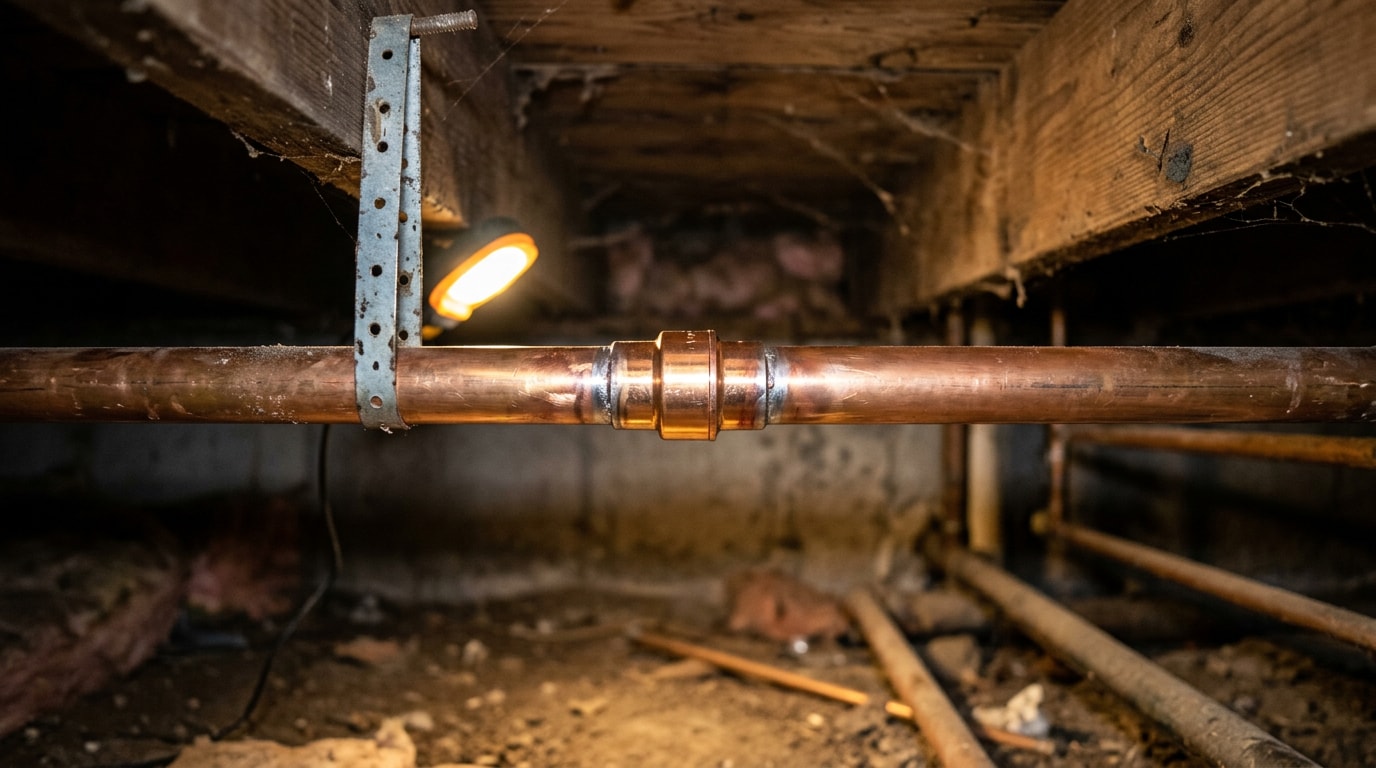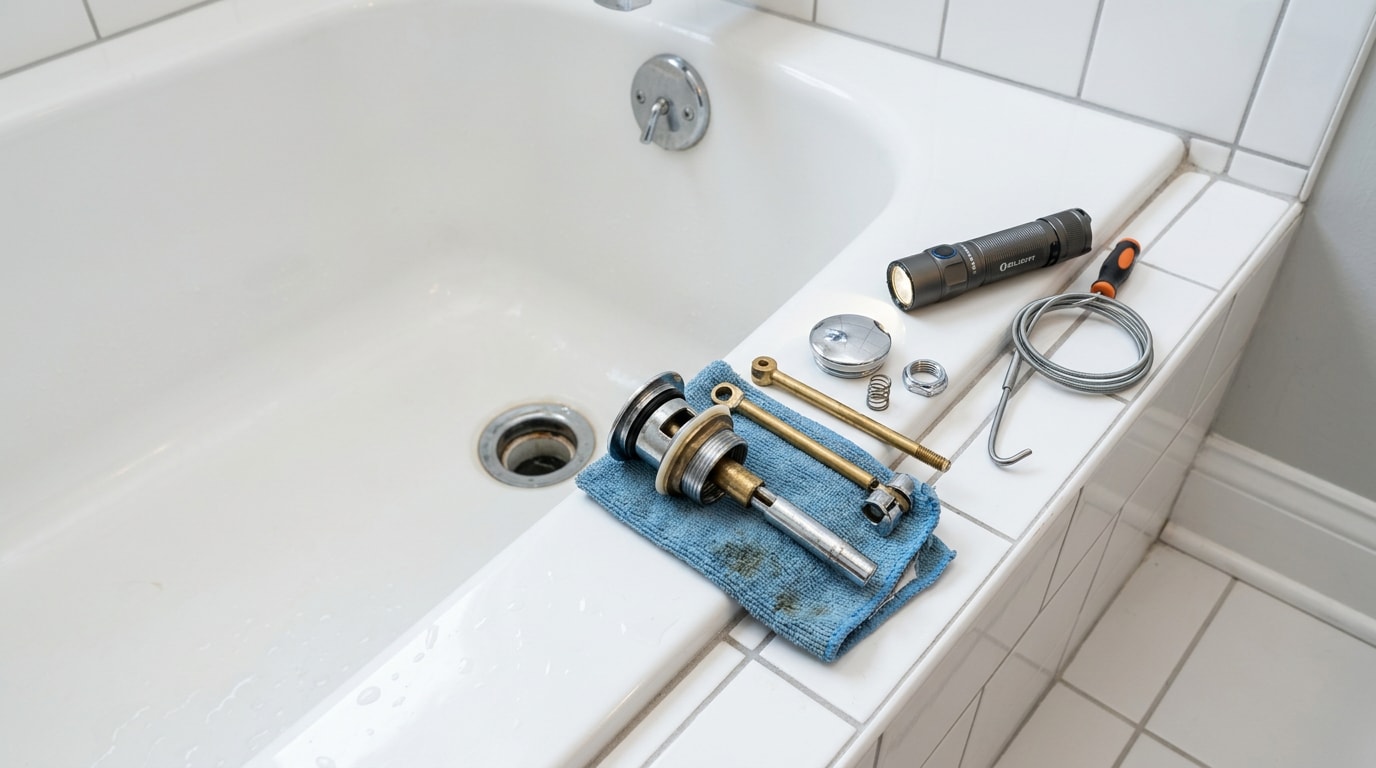

A plumbing riser is the vertical pipe section that moves water, waste, or vent air between floors, and most two-story homes in Bixby have one running inside a wall right now. Homeowners rarely think about this pipe until pressure drops upstairs or a ceiling stain appears below a bathroom. This guide breaks down what a riser does, which material it's probably made from, and the exact signs that mean it's time to call a plumber.
What Is a Plumbing Riser?
A plumbing riser, sometimes called a riser main, connects the horizontal plumbing lines in your basement or crawl space to the fixtures upstairs. It works the same way whether the building is a two-story farmhouse off 111th Street or a commercial complex near downtown Bixby.
Even single-story Bixby homes often have short risers. One example: the vertical run from a water heater up to a second-floor bathroom, or the stack that vents sewer gas through the roof.
Think of a riser as the plumbing system's elevator shaft. It moves supply and waste vertically so horizontal branch lines can distribute it to individual fixtures.
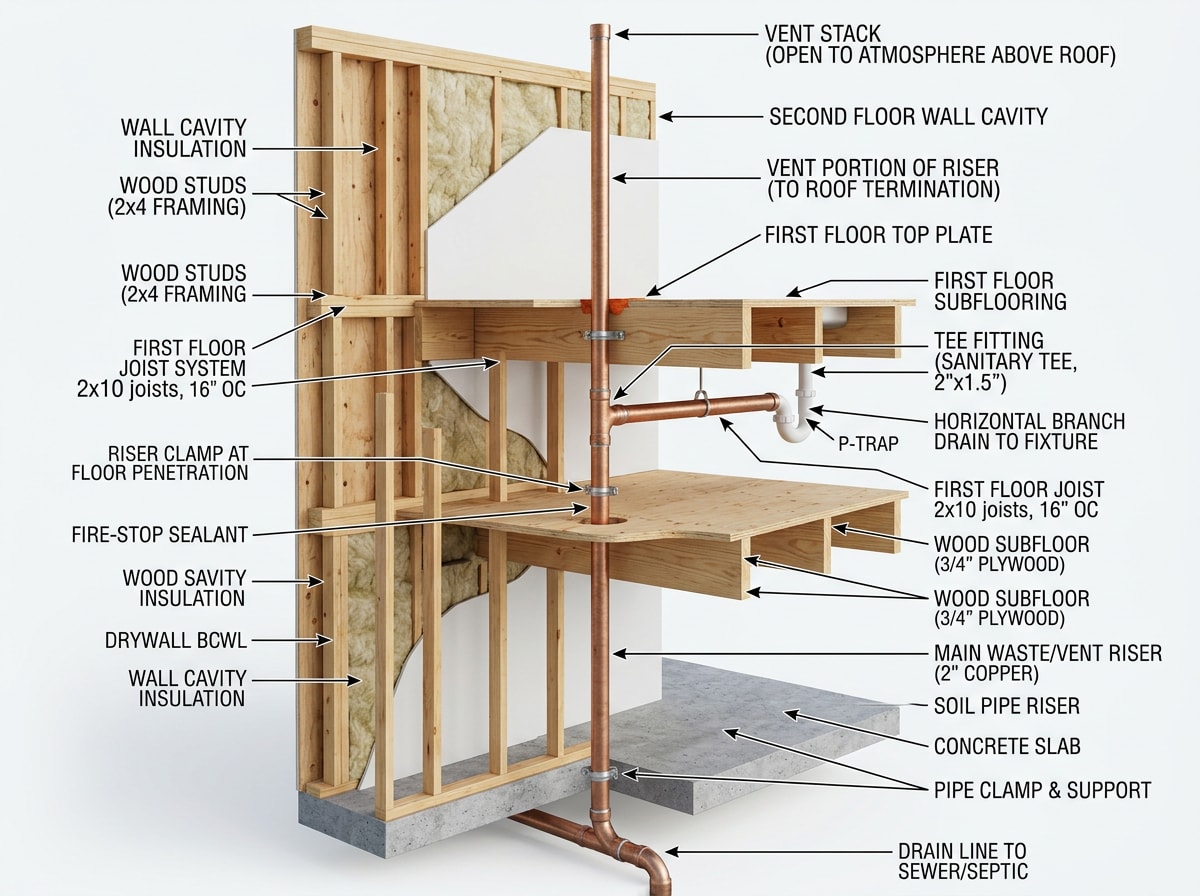
Want the bigger picture of how supply, drain, and vent components work together in your home? Visit our general plumbing services page for a full breakdown.
What Are the Core Functions of a Plumbing Riser?
A riser typically handles one of three jobs: pushing potable water supply upward to fixtures, carrying wastewater and sewer gas downward or venting it out through the roof, or, in larger buildings, returning hot water through a dedicated recirculation loop.
Supply risers stay pressurized at all times, so a small crack can cause a surprisingly large leak. Drainage and vent risers rely on gravity and air balance instead, which is why a clog usually shows up as slow drains or sewer odor rather than standing water.
Types of Plumbing Risers
Not every riser does the same job, and the type usually tells you what kind of problem you're dealing with.
- Supply riser — delivers pressurized hot or cold water to upper floors.
- Waste stack — the vertical drain pipe carrying sewage and greywater down to the main sewer line; sized larger than a supply riser to handle solids.
- Vent riser — runs alongside or ties into the waste stack, letting sewer gas escape through the roof and keeping trap seals from siphoning dry.
- Gas riser — less common residentially, carries natural gas or propane vertically to upper-floor appliances.
Material and sizing for all four types aren't arbitrary. They're set by whichever plumbing code a jurisdiction has adopted, almost always a version of the International Plumbing Code. The IPC is the most widely adopted plumbing code across the United States, currently adopted in 37 states. Local Bixby permitting follows Oklahoma's adopted code edition, so replacement work needs to match current requirements, not whatever was installed decades ago.
Riser Materials and Lifespan
Risers have historically been built from copper, galvanized steel, or cast iron, though PEX has become a common modern substitute for copper supply risers. Each material ages differently, and in homes with harder water, mineral buildup can shorten the realistic lifespan of any metal pipe compared to manufacturer estimates.
Properly installed copper pipes last 50 to 70 years on average, while PEX lasts 25 to 50 years. Cast iron remains a preferred choice for waste stacks specifically because its mass dampens the sound of water rushing through upper floors, something lighter materials don't do as well.
| Material | Typical Lifespan | Pros | Cons | Relative Cost |
|---|---|---|---|---|
| Copper | 50–70 years | Corrosion-resistant, proven track record | Costly, vulnerable to acidic water | High |
| PEX | 40–50 years | Flexible, fewer joints, affordable | UV-sensitive, newer track record | Low–Medium |
| Cast Iron | 50–100 years | Quiet, durable for waste stacks | Heavy, can rust and crack with age | Medium |
| Galvanized Steel | 20–50 years | Inexpensive historically | Prone to internal corrosion, now largely discontinued | Low |
PEX supply risers are tested to a specific standard before they ever reach a jobsite. PEX intended for use with potable water has a minimum extrapolated lifetime of 50 years when tested in accordance with ASTM F2023. You can review the PEX material testing standard from the Plastics Pipe Institute for the full technical breakdown.
Lifespan estimates vary by water chemistry, installation quality, and usage, so treat these as general ranges rather than guarantees.
What Does Plumbing Riser Replacement Cost in Bixby, OK?
Riser replacement pricing depends on material, pipe diameter, and how hard the pipe is to access behind finished walls. For reference, per-linear-foot costs typically run $150 to $250, covering everything from a P-trap under the bathroom sink to a sewer line below the yard.
| Project Scope | Typical Cost Range |
|---|---|
| Plumbing work only (per linear foot) | $100 – $250 |
| Material cost only, copper or PEX | $2 – $12 per linear foot |
| Wall, floor, or ceiling restoration | Separate line item, varies by finish |
That per-foot figure usually covers the plumbing work alone. Opening and restoring drywall, flooring, or ceilings afterward is a separate cost that can add substantially to the total project, especially in a two-story home where the riser runs through finished space on both levels.
Ready to get an exact number for your home? Get a Free Estimate and we'll scope the job before any wall gets opened.
Signs Your Plumbing Riser Needs Repair or Replacement
A failing riser rarely announces itself all at once. It usually sends smaller warning signs first, and catching them early is the difference between a patch repair and a full wall or floor opening.
Reduced Water Pressure
If only the second floor loses pressure while downstairs fixtures run fine, that pattern specifically points to a riser problem rather than a whole-house supply issue. Scale buildup inside older galvanized or copper risers can accumulate for years, gradually choking the flow before anyone notices a leak.
A water pressure test can confirm whether the drop is isolated to the riser or tied to something upstream.
Discolored Water
Brown or yellow tinted water right after you turn on a tap, especially if it clears after running for a minute, often points to corrosion inside the riser or nearby branch lines rather than a problem at the city main. EPA issued the Lead and Copper Rule to address corrosion of lead and copper into drinking water, with corrosion control treatment required to prevent contamination. Persistent discoloration is worth mentioning to your water utility in addition to your plumber.
Leaks Between Floors or Walls
Water stains on a ceiling below a bathroom, or a damp patch on a wall with no visible plumbing nearby, is a classic sign of a riser leak hidden inside the wall cavity. Because the pipe runs vertically, the leak point and the visible stain aren't always in the same spot. Water tends to travel down the pipe or framing before it shows up.
Left unaddressed, these hidden leaks can rot framing and invite mold long before the damage becomes visible from either room. Our leak detection service pinpoints the source without guesswork.
Banging or Gurgling Noises in the Walls
A loud bang when you shut off a faucet, or a gurgling sound from a drain upstairs, usually means trapped air or a venting problem somewhere along the riser. On its own it's rarely an emergency, but paired with any of the signs above, it's worth having looked at before it becomes one.
When to Call a Professional Plumber in Bixby
Riser problems hide behind finished walls and floors, so diagnosing them usually takes more than guesswork. A drain camera inspection pinpoints the exact failure point before any wall gets opened.
Call a plumber if you notice:
- Persistent leaks that return after cleanup
- Pressure that keeps dropping on upper floors
- Rusty or discolored water from multiple fixtures
- Banging or gurgling noises inside the walls
Attempting a DIY fix on a pressurized supply riser or a vented waste stack can make the damage worse and may not meet code once it's inspected. If the riser has already failed, our emergency plumbing team responds the same day. For a planned repair or a full re-pipe, see our professional re-piping services to compare options before committing to a scope of work.
Dealing with plumbing issues outside the house too? Our Outdoor Plumbing Repair in Glenpool, OK guide covers seasonal problems that apply just as much to Bixby properties.
About This Guide
This guide was written by the licensed plumbing team at {{SITE_URL}}, serving Bixby and the greater Tulsa metro. In the field across Bixby's older neighborhoods, we've traced more than one second-floor pressure complaint back to a decades-old galvanized riser choked with scale, long before it ever showed up as a leak.
Have a question about your specific setup? Contact us or check our Bixby, OK service area page to confirm coverage near you.
FAQ
What Happens When a Plumbing Riser Is Not Maintained?
An unmaintained riser left to deteriorate can eventually burst or crack, soaking framing, drywall, and flooring on multiple levels at once. Beyond water damage, ignored riser failure can mean mold growth, disrupted water service, and in multi-unit buildings, displaced tenants while repairs are made.
How Long Do Plumbing Risers Last?
Lifespan depends heavily on material. Copper and cast iron can last 50 years or more, PEX typically runs 40 to 50 years, and older galvanized steel often fails closer to the 20 to 50 year mark. Water chemistry, usage volume, and installation quality can shorten or extend any of these ranges.
How Much Does It Cost to Replace a Plumbing Riser?
Riser replacement typically runs $100 to $250 per linear foot for the plumbing work alone, depending on material, diameter, and accessibility. Opening and restoring walls, floors, or ceilings afterward is a separate cost that can add substantially to the total.
What Are the Signs Your Plumbing Riser May Need Repair?
Watch for dropping water pressure (especially upstairs), rusty or discolored water, unexplained leaks or stains between floors, and banging or gurgling sounds inside walls. Noticing more than one of these at once means it's worth scheduling an inspection soon.
Do Emergency Plumbers Handle Riser Leaks in Bixby?
Yes. A burst or actively leaking riser counts as a plumbing emergency since it's pressurized and can soak multiple floors quickly. Shut off the main water supply if you can locate it, then call for emergency service right away.
Does Homeowners Insurance Cover Riser Pipe Replacement?
Coverage varies by policy, but most homeowners insurance covers sudden, accidental pipe bursts while excluding damage from gradual wear, old age, or lack of maintenance. Check your specific policy language, since insurers often distinguish between the cost to fix the pipe and the cost to repair resulting water damage.